Track Safety Basics
- Freight trains don't travel at fixed times. Schedules for passenger trains often change. Always expect a train.
- All train tracks are private property. Never walk on tracks; it's illegal trespass and highly dangerous.
- It takes the average freight train traveling 55 mph more than a mile—the length of 18 football fields—to stop. Trains cannot stop quickly.
- The average locomotive weighs about 400,000 pounds or 200 tons; it can weigh up to 6,000 tons. This makes the weight ratio of a car to a train proportional to that of a soda can to a car. We all know what happens to a soda can hit by a car.
- Trains have the right of way 100% of the time over pedestrians and vehicles, including police and emergency vehicles.
- Trains overhang tracks. Stay 15 feet back from the tracks. Always assume railroad tracks are in use, even if there are weeds or the track looks unused.
- Trains can move on any track, in either direction at any time. Sometimes its cars are pushed by locomotives instead of being pulled, which is especially true in commuter and light rail passenger service.
- Trains are quieter and moving faster than you think – only trains belong on the tracks Today's trains are quieter than ever, producing no telltale "clackety-clack."
- Remember to cross train tracks ONLY at designated pedestrian or roadway crossings, and obey warning signs and signals posted there.
- Stay alert around railroad tracks. Refrain from texting, using headphones or other distractions that would prevent you from hearing an approaching train; never mix rails and recreation.
As part of our mission to reduce deaths and injuries at highway-rail grade crossings and around tracks and trains, Operation Lifesaver, Inc. offers rail safety tips for drivers, pedestrians, and an array of audiences.
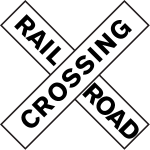
Get to know these railroad signs and signals to stay safe when driving or walking near railroad crossings.